Tuesday, 6 March 2012

Muscle Cramp


By Nicole Picas

Overview and Definition
A common complaint at the practice where I work is that of skeletal muscle cramps, that is, cramps of the muscles involved in moving the limbs. A spasm is an involuntary muscle contraction. If the spasm is prolonged, it becomes a cramp. Thus, a muscle cramp is defined by emedicinehealth.com as: “an involuntarily and forcibly contracted muscle that does not relax”.

Prevalence
Muscle cramps appear to be more prevalent in the older male patients; however, it can affect anyone. Muscle cramping occurs most commonly in the lower limbs, particularly the calf muscles, hamstrings and the feet.

Symptoms
Those of you who have experienced muscle cramps will know that they can range from extremely uncomfortable to excruciatingly painful. These cramps may last for a few seconds to several minutes. One can generally see and feel the tight, hardened muscle underneath the skin.

Causes
Causes of muscle cramps may be dietary related – dehydration, or low levels of calcium, potassium or magnesium. They are often caused by prolonged physical exertion or can be due to nerve or muscle injury. Cramps can also be caused by certain medications; this may be listed as a side-effect. (emedicinehealth.com)

Treatment
The intense pain associated with muscle cramps often results in one tensing the affected muscle even more. In order to relieve a muscle cramp, one needs to relax the involved muscle. Heat and gentle massage may assist in relaxing the muscle, and stretching can aid in relieving symptoms and reducing spasms. The underlying causes, such as dietary deficiencies, must also be addressed. (emedicinehealth.com)

So, next time you are rudely awoken in the middle of the night with that familiar intense pain in your calf muscle, try to stretch out the muscle and gently massage it until the symptoms subside.


Spasm: A sudden, involuntary smooth or skeletal muscle twitch ranging in severity from merely irritating to very painful; may be due to chemical imbalances. In spasms of the eyelid or facial muscles, called tics, psychological factors have been implicated. Stretching and massaging the affected area may help to end the spasm. A cramp is a prolonged spasm; usually occurs at night or after exercise.

Marieb, E.N. (2004). Human Anatomy & Physiology. (6th ed.). Pearson: New York. 

Tuesday, 21 February 2012

Balancing Act

By Gill Scheepers


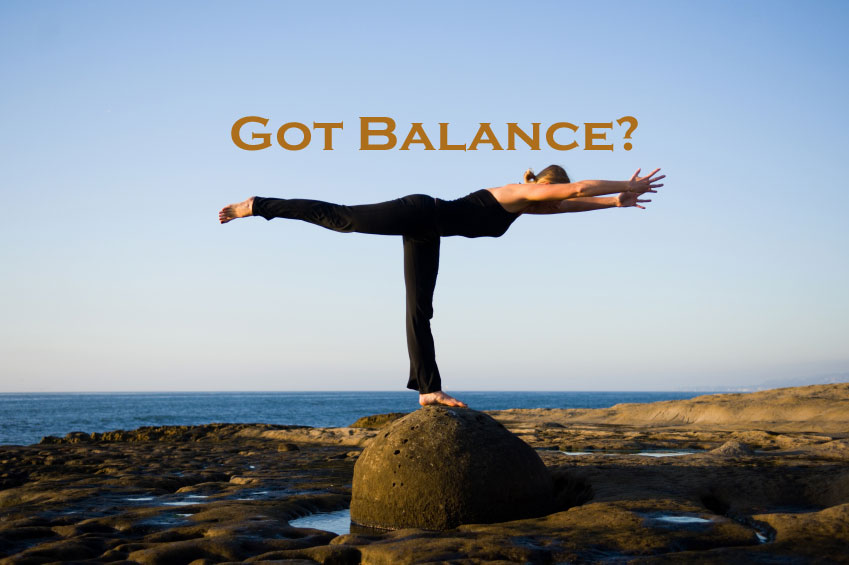
The term balance is usually associated with a balance between work and family, or between exercise and rest, however balance in the physical sense of the word is an underestimated component of fitness, and one that should not be neglected when it comes to an exercise programme. While we may spend time focusing on improving strength and cardiovascular fitness, perhaps adding in some stretching and flexibility training, balance training is something that is all too often ignored.

What is Balance?
Balance can be divided into two components, namely static balance which is the ability to remain motionless about a fixed position, and dynamic balance which is the ability to remain motionless about a fixed position, whilst simultaneously completing a physical action/movement. Good balance can be defined as the ability to remain upright and steady with an even distribution of weight.

The term proprioception is important when discussing balance. Proprioception is the ability to sense where the body is in space, or in other words, our internal sense of balance and body position. It provides us with a sense of body awareness and can be thought of as almost a ‘sixth sense’. It allows you to recover when you may stumble over an object or to fall with a minimum amount of injury as your body subconsciously makes adjustments to restore its sense of balance. A proper sense of balance is a survival necessity.

The proprioceptive system uses stretch receptors and pressure receptors situated in our muscles, joints and skin to inform our brain about our physical environment and how we are interacting with it, and then to provide subconscious adjustments and corrections to keep our body’s in a safe and stable position.

A large percentage of these receptors are in our feet; which makes sense as they are the parts of our body most in contact with our physical environment. If we reduce the sensory feedback from our feet to our brains by wearing thick, shock-absorbing soles then the brain has less information to work with, thus reducing the quality of the movement pattern produced. Taking this into account, it may be a good idea to perform balance exercises bare-foot, just make sure that you are in a safe environment with no sharp objects around.

Good balance and proprioception is dependant on the body’s vestibular system (located within the inner ear- the reason why you may feel a lack of balance if you have an inner ear infection), the visual system and the musculoskeletal system. These systems all work together to maintain balance.

The vestibular system uses a complex mechanism in the inner ear to help the brain sense position and movement (i.e. up and down, side to side and circular movements). The visual system uses our sight to tell us where we are in relation to our surroundings- you can test this by closing your eyes while standing and feeling how your sense of balance changes. The musculoskeletal system provides the ability to stand, move and sense positions and movements through our muscles and joints, and to adjust the position of the body to maintain balance, this occurs throughout the day without us even realising it. If you stand still, preferably with eyes closed, you will feel how your body shifts and moves around to maintain balance, a mechanism known as postural sway.

Maintaining a good sense of balance is important for your survival. A lack of balance can lead to injury, accidents or an inability to respond to changes in your environment. Poor balance leads to a fear of falling, which results in fear -related avoidance of many day to day activities. This can ultimately lead to a lower quality of life, something which should be avoided. There are many things which can impair your sense of balance. Illness is one the most common causes of a loss of balance and can affect almost anyone (anything from an ear infection to more serious neurological illnesses such as Parkinson’s disease).

Balance training challenges body equilibrium and teaches the sensory receptor and motor systems to rapidly integrate and perform highly skilled movement patterns in a safe and balanced manner.

Consequences of Poor Balance
A lack of balance is often associated with an older population; however it is just as important in the younger, as well as athletic population. Although a lack of balance is one of the key reasons for falls in the older adult population, a lack of balance and proprioception in the younger population can not only cause injuries, but also predispose to re-injury, if not properly addressed and corrected.

Benefits of Balance Training
·        Strengthens muscle stabilizers-postural muscles, if you are prone to ankle sprains - then regular balance training can help to prevent and correct this.
·        Decreased incidence of lower limb (predominantly knee and ankle) injuries in athletes. -football players with inferior balance experienced four times the amount of ankle injuries compared to those athletes with satisfactory balance.
·        Decreased incidence of falls in older populations
·        Decreased chance of injury recurrence, if balance is  restored following a fall or injury

Exercises to Improve Balance and Proprioception
Exercises which are targeted at improving balance and proprioception are simple and time efficient, and can be easily and often rapidly progressed. Effective exercises challenge the vestibular (inner ear), visual and musculoskeletal systems. Try and spend a few minutes at the end of your training session performing some of these exercises.

Single Leg Stand with Eyes Open:
·        Stand on a stable surface.
·        Transfer your weight to one leg and squeeze the standing leg glute.
·        Lift the opposite leg up, so you are balancing on one leg.
·        See if you can hold the one-legged stance position for 30 seconds.
·        Swop sides to balance on the other leg.
·        Repeat a few times.

Progression:
·        Perform the same exercise with the eyes closed.
·        Perform the same exercise standing on an unstable surface, such as a wobble cushion, a BOSU, a thick exercise mat or pillow.
·        Hold the single leg stance position and turn the head to look from side to side and look up and down.
·        Hold the single leg stance position and reach down to touch your toes, while trying to maintain a balanced position.
·        Hold the single leg stance position and bend the standing leg into a squat without losing balance.

Balance is a multi-sensory activity. Our “sense” of balance, is based on the proper functioning of the vestibular system in close conjunction with our visual, motor skills and positioning (proprioceptive) systems. Body position, muscular-skeletal control, tactile feedback, motor coordination and visual processing inputs all combine to form a “multi-sensory network” with many functions. This seamless system of inputs and feedback must work precisely to form what we call our sense of balance.


Tuesday, 14 February 2012

Common causes and prevention for knee injuries in sports

By Adam Stein

The prevalence of knee injuries is becoming more and more common amongst social, amateur and professional sportsman worldwide. It is seen in the likes of social indoor soccer to the profession level of Australian star Quade cooper in the 2011 rugby world cup.
The most prevalent knee injuries are the ACL tear (Anterior cruciate ligament) and medial meniscus tears. These tears can be partial or full tears. After an ACL or meniscal tear generally surgical intervention will be needed to get the sportsman able to return to sport.


Common causes for Knee injuries

  • Poor lower body flexibility ( especially Hamstrings)
  • Improper lower body muscular strength
  • Imbalanced Biomechanics
  • Incorrect sports equipment ( Soccer studs too long)
  • Playing sports when unfit or unprepared , (this lead to rapid fatigue of stabilizing muscles)
  • Inadequate warm up


How to prevent knee injuries

  • Always warm up properly before playing any sport
  • When doing gym training do not leave out lower body exercises , incorporate compound exercises for adequate strength such as squats and lunges and include isolation exercises such as knee flexion and calf raises.
  • Maintain correct lower body flexibility, stretch after playing sport and after all gym workouts.
  • Avoid overtraining and “listen to your body” if you are feeling sore do not exercise and allow for recovery.    
  • Include proprioception and agility training into your gym training routine.
  • Before playing sport after a long break ensure sport specific exercises and polymerics have been done so the body is ready to take on all the demands of your sport.

Tuesday, 7 February 2012

Can Exercise Help People Who Have Parkinson’s?
By Tanya Bellon, Biokineticist

What is Parkinson’s?
Parkinson’s is a progressive neurological disorder caused by a decrease in the neurotransmitter, dopamine, in a part of the brain known as the substantia nigra. The decrease in dopamine is due to the death of dopaminergic cells. There are no known causes of Parkinson’s, however genetics and environmental factors have both been considered as contributing factors. Other contributing factors are aging, autoimmune response as well as mitochondrial dysfunction.
Common symptoms of Parkinson’s:
·        Tremor
·        Slow movements
·        Rigidity in joints
·        Shuffle walking
·        Freezing while performing an exercise, pauses before initiating movement e.g. chair rocking before standing, recurring falls.
·        Absence of associated movements e.g. no arm swing while walking
·        Loss of facial expressions
·        Activities of daily living (ADLS) are affected e.g inability to cut food, difficulty swallowing, rising from a chair, dressing or bathing
·        Speech – volume control and understandability

Symptoms do not appear until 80% loss of dopaminergic cells.

How does Parkinson’s affect exercise?

People with Parkinson’s experience fluctuations in their symptoms depending on exercise and changes in position. This is due to the autonomic nervous system dysfunction, which affects their thermal regulation. This leads to altered heart rate and blood pressure.

The efficiency of the exercises that are performed decreases due to the slowness of movements and rigidity that is common amongst people with Parkinson’s. This leads to an increased heart rate and oxygen consumption. Akinesia (freezing) may make certain activities more difficult to perform.


Tip 1

Don’t exercise in intense heat or get very hot when exercising.

Tip 2

Exercise when your medication is at its peak circulation in your body.

Tip 3

Getting out of a chair! (This is for everyone)

Next time you feel you are rocking yourself out of a chair, I want you to stop, move towards the edge of the chair, make sure your feet are firmly on the ground, shoulder width apart,  take a nice deep breath in and stand up as you breathe out, pushing your weight through your heels.  Try it!

Can exercise change the brain of a Parkinson’s patient?
Due to the lag time between loss of neurons and symptoms becoming noticeable, patients only get help once their condition is at a progressive stage. However studies have found the brain is malleable and compensates for the changes. The brain reshapes itself in response to experience this is known as exercise-dependent neuroplasticity. Exercise may contribute by maintaining old connections, form new ones and restore lost ones.

Exercise performed at the correct intensity can maintain certain connections and possibly improve certain activities of daily living. Exercise needs to be performed at the correct intensity, specificity, difficulty and complexity in order to improve motor skills like walking and balance. These two motor skills are very important in preventing falls. Research suggests that exercise increases the amount of binding sites (D2 receptors) on the receiving cells of dopamine signal. This enables the signal to be passed more efficiently, reducing the amount of dopamine left in the synapse between the cells. This indicates that the signal is finished, therefore reducing the amount of Parkinsonian symptoms e.g. tremor.

Exercise has also been shown to help with the regulation of the glutamate molecule that signals between brain cells. Dopamine keeps glutamate at lower levels.
In Parkinsonian animal research it has been found that with the decrease in dopamine, there is a build - up of glutamate which damages cells that control body movement. Animal exercise studies indicate that exercise may play a role in normalizing the glutamate levels.

Suggested modalities of exercise for someone who has a movement disorder like Parkinson’s
·        Walking or Swimming
·        Aqua aerobics
·        Stretching
·        Activities of daily living

Additional exercises that would be performed in Biokinetic therapy:
·        Balance exercises
·        Steps
·        Stepping over items
·        Functional exercises e.g. buttoning a shirt, picking up marbles, tying shoe laces, standing up from a chair, getting on and off the floor
·        Hydrotherapy (water therapy)
·        Walking on treadmill or bike depending on stability and progression of Parkinson’s

The verdict is still out on how this condition is caused and whether or not exercise can help people who have Parkinson’s. From a Biokineticist’s perspective, exercise is an essential part of a patient’s management programme, as it not only reduces falls, but also empowers the patient to think he/she is in control of his/her body and not the disease.
Please consult with your neurologist or consult with a medically trained biokineticist before starting any new exercise regime.


Monday, 30 January 2012

Alter your paradigm -The type 2 diabetic and EXERCISE

Alter your paradigm -The type 2 diabetic and EXERCISE


by Arshaad Hoosen
It is 2012; the year has already ticked over, again and by now you have probably had another encounter with the legendary New-Year’s Resolution. If you that is a distant memory like the holidays then perhaps this article is for you, read on. Keep reading. Excellent. In my experience, the word exercise has the connotation that is surrounded by the dramatic shock of the nemesis of most people. People see exercise as a means of torture where; people wear barley enough clothes and they head off for miles as if the devil himself were cracking the whip.

You probably have seen some man or woman with red agony etched all over their faces with perspiration profusely pouring down their faces. The alternative to the runner is the gym gorillas who grunts and growls as he lifts what looks like enough weight to shift the earth of its axis, while we’re at it let us not forget the gym bunny, you know the one who no matter what weird exercises was being done always seemed to have the perfect make up that did not run or smudge. Well if you have been thinking something similar, yes, read on.

Copernicus said that the world was round and not flat and we locked him up in a tower. Why? Was it because we cannot have ranting lunatics destroying all sense of decorum? Whatever the case is, the norms were being challenged. So it must be raving lunacy to believe that exercise somehow must help. That is where my madness ends, sadly. Exercise is not, running after grandkids, or walking up lots of stairs everyday in your double storey, or walking to the office from the car park with brief case in hand. Grandchildren can be tiring, stairs challenging and even lugging that heavy brief case a burden, bear with me that is NOT exercise.

Exercise is something that is performed on a regular basis with the aim to improve aspects of one’s health. This does not confine exercise to fitness clubs (Gyms) or subjecting your body to gruelling hours of grinding out miles on the road. These are just some avenues that are available to us.

Let us examine the various types of fitness which can be positively influenced by exercise for the Type2 diabetic;
·         Aerobic fitness (walking/jogging/swimming/cycling),
·         Muscular strength (lifting or pushing against resistance eg. Body weight or metal weights),
·         Muscular endurance (the number of times a movement can be repeated till fatigue),
·         Flexibility (the amount of movement about a joint)
·         Body composition (amount of; muscle, fat, bone, connective tissue in the body)

All of this is fantastic but what does this mean to you? Why am I diabetic and what can I do? The why I am diabetic, the actual answer is debated by scientists but the general trends appears to be a relationship between adiposity around the stomach area and various mechanisms that lead to insulin resistance (the inability of your body to recognise the signal of insulin which indicates an increase blood sugar levels) and eventually diabetes.

So what ways can I reduce my adiposity? Where does the adiposity come from? Many individuals claim “it runs in the family”. This may be true, but what we look like can be altered by how we behave, for example; fair skinned people, go to the beach, use the appropriate clothing and body creams, and depending on the frequency and duration of their visit(s) develop a fabulous tan or burn. So where does my adiposity come from? Well more often than no t, It is how you behave in terms of frequency and duration of eating and exercise. The more frequent and longer one spends eating and the less frequent one engages in exercise the better developed one’s adiposity. Take home message: Improve how you eat, Improve how much you exercise, results in lowering adiposity and improving ones blood sugar control.

A word to the wise: Exercising intensely does not justify you eating cake afterward. By “misbehaving” and incorrectly eating you “undo” all your hard work!

What exercises can I do?
Back to the types of fitness one needs to address all the elements mentioned before, aerobic fitness, muscle strength, muscle endurance and flexibility in combination with a good eating plan can help to promote improved body composition. Aerobic fitness helps to keep your lungs, heart and blood vessels in good shape, and activities that have continuous prolonged rhythmical movements which involve the entire body moving are ideal. If running the rubber off a pair of shoes is not your cup of tea, then perhaps dancing for an hour maybe your kettle of fish, and if you are challenged to dance, walk around the garden for 30minutes at a brisk pace.

Muscle endurance and muscle strength are closely related. Muscle strength has got to do with the maximum resistance that one can move, however what we must consider is that as we get older, strength decreases, and the ability for one to perform repeated resisted movements also decreases with the decline in strength, therefore some form of resistance training is important to maintain strength. Again if you prefer not go to a gym, then in the comfort of your own home one can perform body weight exercises like push-ups, wall slides, crunches and squats.

Of course after exercise, stretching is vital not only to keep you supple but also to wring the excess fluids out of the muscle and speed up recovery post exercise.
How often do I exercise?

The minimum goal is for exercise is 150min a week, which roughly equates to 30minutes of exercise 5 days a week. 30minutes sounds like a lot of time but if you remember that there are 1440minutes in a day and 30minutes only accounts for 2% of your day and 1.49% in a week! 1.49%, if that was an interest rate banks were lending money at, you would be interested, so why not take interest in your body and do the right thing for your body and invest in exercise. After all what do you have to lose?

If you haven’t figured out what you are going to lose (hint: excess pounds)
Challenge your thoughts, Challenge your mind, Challenge your body!

Tuesday, 24 January 2012

What’s your Position? – Postural Awareness

By Bailey Cockerill

Over the past few months there has been an alarming amount of young individuals with posture that is more commonly seen in people nearing their late 50’s walking through our practice doors. This could possibly be attributed to the way we live our daily lives, behind desks, in front of computers, driving around town and the likes. If we were to actually add up the amount of hours we stay in these positions, it’s no wonder that when we try and be active, moving and functional, that we start experiencing some discomfort.


Assessing your Stance:
Adapted from bodybalance.co.uk

As the postural chart indicates, there’s a huge variance in everybody’s posture, but hopefully we can lean more towards the “correct” posture on a day to day basis, to allow our bodies to work the way they have been biomechanically designed, ensuring a delay in premature degeneration of the various structures.

Ultimately, we’re looking for what is called the “plumb line” where the ears line up with the shoulders, hips and knees. By doing so, weight and load dispersion experienced in the joints is at it’s most effective.

However, naturally, as we age there will be some change in posture, as the disc spaces between the vertebra tend to loose some height, changing the actual curvature of the spine. It is therefore VITALLY important to make sure we start off with a decent posture and age gracefully instead of ending up like the hunch back of Notre dam!

Have a squizz at your posture next time you walk past something that shows you your reflection. If you notice there are some strange angles looking back at you, chat to a Bioknieticist who can assess your stance, tell you where there are weaknesses and tightened structures and provide you with an exercise routine that can improve your everyday position.  

Monday, 16 January 2012

EXERCISE & STRESS

by Lauren Williamson Moloi

One way to take control of the stress in your life is through physical activity. Being active can boost your feel-good endorphins and distract you from daily worries.
You know that exercise does your body good, but you're too busy and stressed to fit it into your routine. Hold on a second — there's good news when it comes to exercise and stress.
Virtually any form of exercise, from aerobics to weightlifting, can act as a stress reliever. If you're not an athlete or even if you're downright out of shape, you can still make a little exercise go a long way toward stress management. Discover the connection between exercise and stress relief — and why exercise should be part of your stress management plan.
Exercise and stress relief
Exercise increases your overall health and your sense of well-being, which puts more pep in your step every day. But exercise also has some direct stress-busting benefits.
·                                 It pumps up your endorphins. Physical activity helps to bump up the production of your brain's feel-good neurotransmitters, called endorphins. Although this function is often referred to as a runner's high, a rousing game of tennis or a nature hike also can contribute to this same feeling.
·                                 It's meditation in motion. After a fast-paced game of racquetball or several laps in the pool, you'll often find that you've forgotten the day's irritations and concentrated only on your body's movements. As you begin to regularly shed your daily tensions through movement and physical activity, you may find that this focus on a single task, and the resulting energy and optimism, can help you remain calm and clear in everything that you do.
·                                 It improves your mood. Regular exercise can increase self-confidence and lower the symptoms associated with mild depression and anxiety. Exercise also can improve your sleep, which is often disrupted by stress, depression and anxiety. All this can ease your stress levels and give you a sense of command over your body and your life.
·                                 Consult with your doctor. Begin any new fitness program by consulting with your health care professional, especially if you have any medical conditions or are obese.
·                                 Walk before you run. Build up your fitness level gradually. Excitement about a new program can lead to overdoing it and possibly even injury. Plus, if you begin your program slowly, chances are better you'll stick with it. If you're new to exercise, aim for about 20 to 30 minutes of exercise three to four days a week and increase gradually. For most healthy adults, the Department of Health and Human Services recommends getting at least two hours and 30 minutes a week of moderate aerobic activity (think brisk walking or swimming) or one hour and 15 minutes a week of vigorous aerobic activity (such as running) — preferably spread throughout the week. It also recommends strength training exercises at least twice a week.
·                                 Do what you love, and love what you do. Don't train for a marathon if you dislike running. Virtually any form of exercise or movement can increase your fitness level while decreasing your stress. The most important thing is to pick an activity that you enjoy. Examples include walking, stair climbing, jogging, bicycling, yoga, tai chi, gardening, weightlifting and swimming.
·                                 Pencil it in. Although your schedule may necessitate a morning workout one day and an evening activity the next, carving out some time to move every day helps you make your exercise program an ongoing priority.